Conflict and displacement situations profoundly transform the daily lives of families. Beyond facing immediate needs related to housing, food, and safety, displaced individuals may experience loss, stress, the breakdown of support networks, and difficulties adapting to new environments.
For children, these experiences can impact their sense of safety and well-being. At the same time, mothers, fathers, and caregivers must navigate their own anxieties and losses while continuing to support their children.
In this context, positive parenting can offer tools to strengthen family bonds, support children’s emotional needs, and create everyday spaces of safety and connection.
However, families affected by emergency situations do not always have access to in-person support services or stable internet connectivity. For this reason, Screens of Hope sought to answer a specific question:
1. Initial Approaches and Content Adaptation (Late 2024)
The development of Screens of Hope began with a prior experience using positive parenting content developed for Waves of Support (radio spots) in late 2024 and early 2025.
Building on these materials, we explored how to adapt content originally designed for other formats into shorter, more accessible audiovisual pieces suitable for digital circulation.
During this phase, three videos (extracted and adapted from the Waves of Support project) and three infographics were distributed, specifically tailored to the regional context.
For distribution, we collaborated with local organizations and community leaders, who shared the content through digital networks and WhatsApp groups.
This first initiative helped identify potential approaches in language, format, and narrative, laying the groundwork to test how these materials could address the needs of families experiencing crisis situations.
2. Testing, Learning, and Refining: The Catatumbo Pilot (January 2025)
Before producing the complete set of materials for Screens of Hope, the content was tested during the crisis in Catatumbo in January 2025. For this initial phase, three radio spots from Waves of Support were selected and adapted, resulting in the development of three videos and three infographics tailored to the crisis context and the needs of displaced families in the region.
The content was distributed with the support of local organizations and community leaders, who shared it through digital networks and WhatsApp groups. According to reports from partners, the videos reached approximately 1,089,935 people.
This pilot provided practical guidelines on how to transform and adapt existing content into relevant audiovisual tools for crisis settings. The experience made it possible to identify what worked, what needed adjustments, and what role local organizations and networks could play in distribution. These insights were essential in guiding the subsequent development of Screens of Hope.
3. Listening to Communities and Defining the New Strategy (February to May 2025)
From February to May, the objectives and types of materials to be developed were defined, along with the communities to work with after the pilot, moving the project into a broader co-creation process.
Engagement spaces and focus groups were held with caregivers affected by displacement in Bajo Cauca, Catatumbo, Chocó, and the outskirts of Bogotá. These focus groups provided firsthand insight into their experiences, concerns, and needs related to parenting in crisis contexts.
Active listening enabled the transition from adapting existing content to creating new materials specifically designed around the lived experiences of these families.
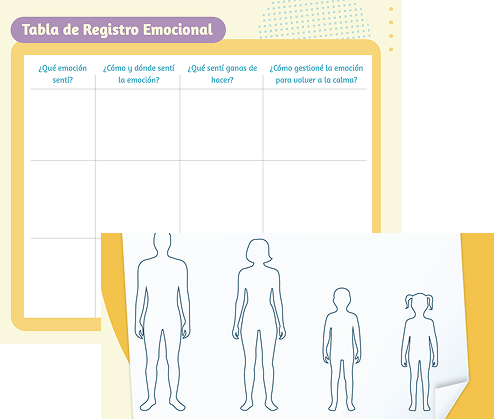
Key themes identified included emotional regulation, managing childhood fears, caregiver mental health, strengthening family bonds, routines, play, restoring a sense of safety, and providing support through loss.
4. Scriptwriting and Audiovisual Production (May 2025)
Concurrently, during the second half of May 2025, insights from the focus groups helped establish the language, tone, themes, and scenarios that were later incorporated into the scripts recorded that same month.
The scriptwriting process was carried out in collaboration with La Otra Juventud, contributing their expertise in storytelling and knowledge of displaced communities.
The goal was to integrate recommendations into relatable stories and familiar scenarios rather than presenting them solely as instructions.
Through this process, two main formats were developed:
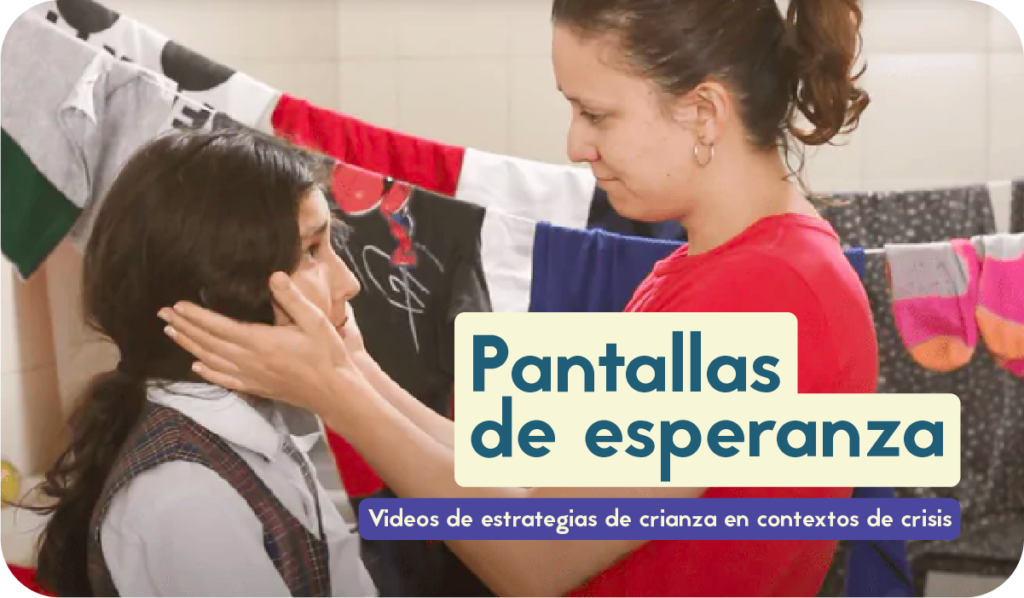
10 short videos (under three minutes) focusing on practical positive parenting recommendations.
5 narrative videos (longer duration) using dramatized situations to address complex parenting challenges in emotionally difficult contexts.
The experiences shared by the communities also helped shape the characters, situations, and dialogue throughout the stories.
5. Launch and Distribution (June 2025)
Once the new content was finalized, Screens of Hope was rolled out across various territories.
Executed between June 3 and June 13, the distribution strategy combined WhatsApp, Facebook, Instagram, and local organizational networks. Community spaces were also utilized to project the content using laptops or other devices, particularly in areas with limited connectivity.
The video files were compressed to approximately 5 MB per piece to facilitate sharing and playback with minimal data consumption. Subtitles and regional linguistic adaptations were also included.
During partner mapping, participating organizations shared historical engagement metrics and reach projections. These were complemented by digital metrics from WhatsApp, Facebook, and Instagram, as well as distribution reports, to estimate the strategy’s overall impact.
In this expanded rollout—conducted alongside partners Media Lectura (Bogotá), 5ta con 5ta (Catatumbo), Made in Chocó (Chocó), and Asociación Campesina Inzá (Cauca)—Screens of Hope directly reached approximately 261,039 people, excluding the reach recorded during the Catatumbo pilot.